
Starts from another blank conversation.
You find the files again, explain the business again, and rebuild the instructions that made the last answer trustworthy.
How Loomfield works
A monthly report, a client question, and a quarterly comparison may look like different jobs. They still depend on the same files, checks, business context, judgment, and way of presenting an answer.
Product vision / In development
The missing piece is not another clever prompt. It is a durable connection between the finished answer and the method that made the answer useful, so that method can help when the next related need appears.
You find the files again, explain the business again, and rebuild the instructions that made the last answer trustworthy.
The result and the way it was made stay connected, so related work can reuse what mattered without pretending every job is identical.
How the work learns
You do not have to map a workflow or become an AI expert first. Loomfield learns from useful work as it happens, then separates reusable structure from the decisions that still need you.
A correction matters beyond the document in front of you: it can improve the shared way future work is checked, explained, and presented.
Loomfield learns how the work is done, not only the wording of one prompt or one exact repeated task.
Gather information, compare options, draft the report, or answer the question with AI helping alongside you.
Sources, checks, tools, choices, corrections, formatting, and final judgment remain connected to the result.
A new report can inherit a proven analysis method without being forced into the shape of the last job.
Reliable preparation can become a supervised routine, then run within boundaries only when you decide it is ready.
One home for the system
Your main computer is the private hub. It keeps projects, work history, methods, and AI connections together instead of scattering the system across separate chats and services.
The hub gives every screen and supported AI the same place to return for context, while keeping the work itself under your control.
Use a phone, laptop, or tablet to review progress, continue the same work, or approve what happens next.
Claude and Codex can work from shared context, so changing tools does not mean abandoning everything the system learned.
Proposed work, schedules, approvals, exceptions, and stopped jobs remain inspectable instead of hiding inside a prompt.
 Main computerYour hub
What the system grows into
These planned capabilities emerge from Loomfield understanding the work, not from asking you to build automations before the system knows what good work looks like.
Reuse trusted sources, checks, calculations, structures, and presentation choices while the current facts stay current.
Let a client question benefit from report analysis, or a new project inherit a proven way of checking the facts.
Gather and prepare repeatable work on schedule, then bring forward the result, exception, or decision that remains.
Trace a reusable method to the source, correction, decision, and result that taught it to the system.
Product and control
The product keeps complexity behind a few clear places: what needs attention, what each project knows, and what work is proposed or running.
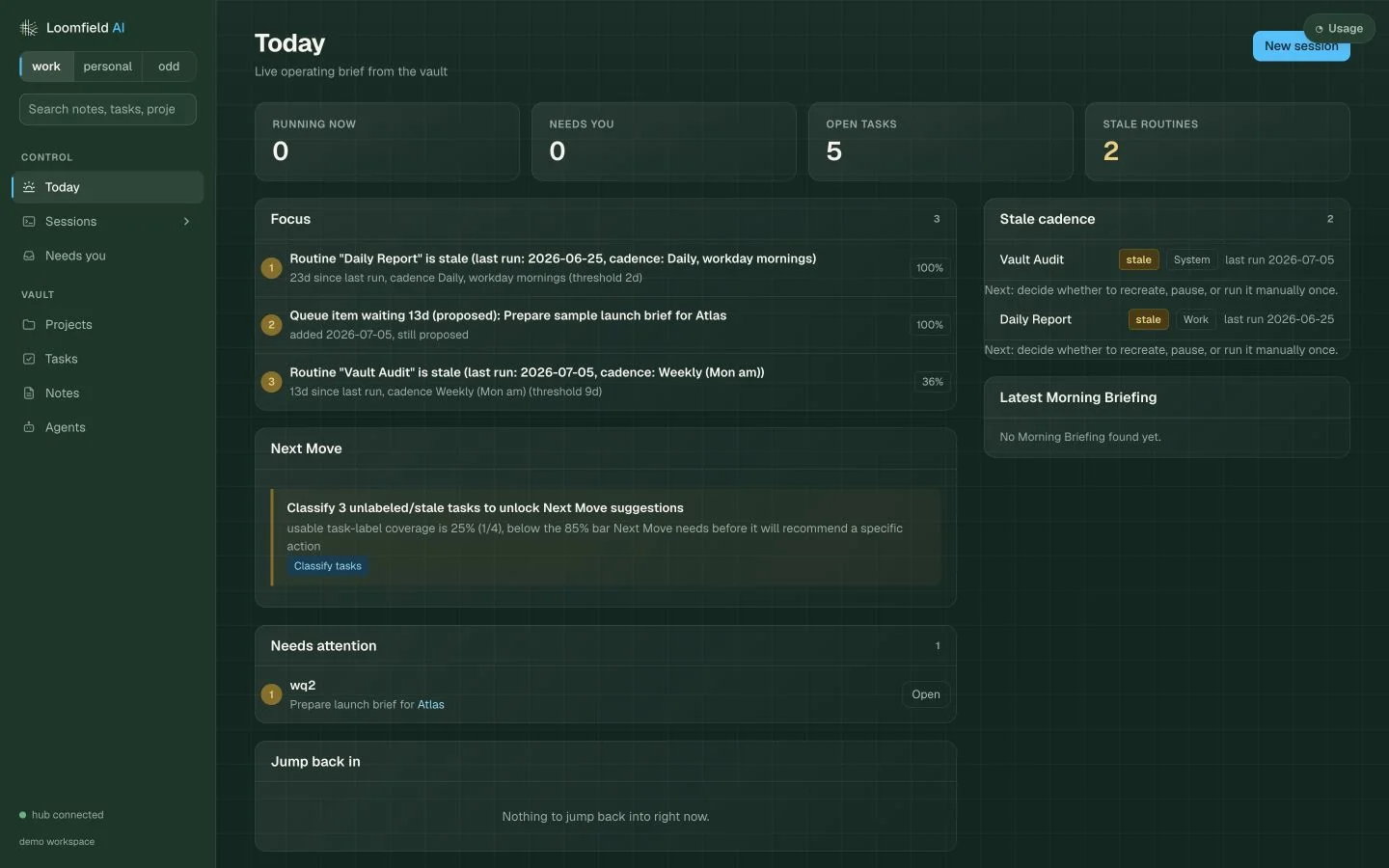
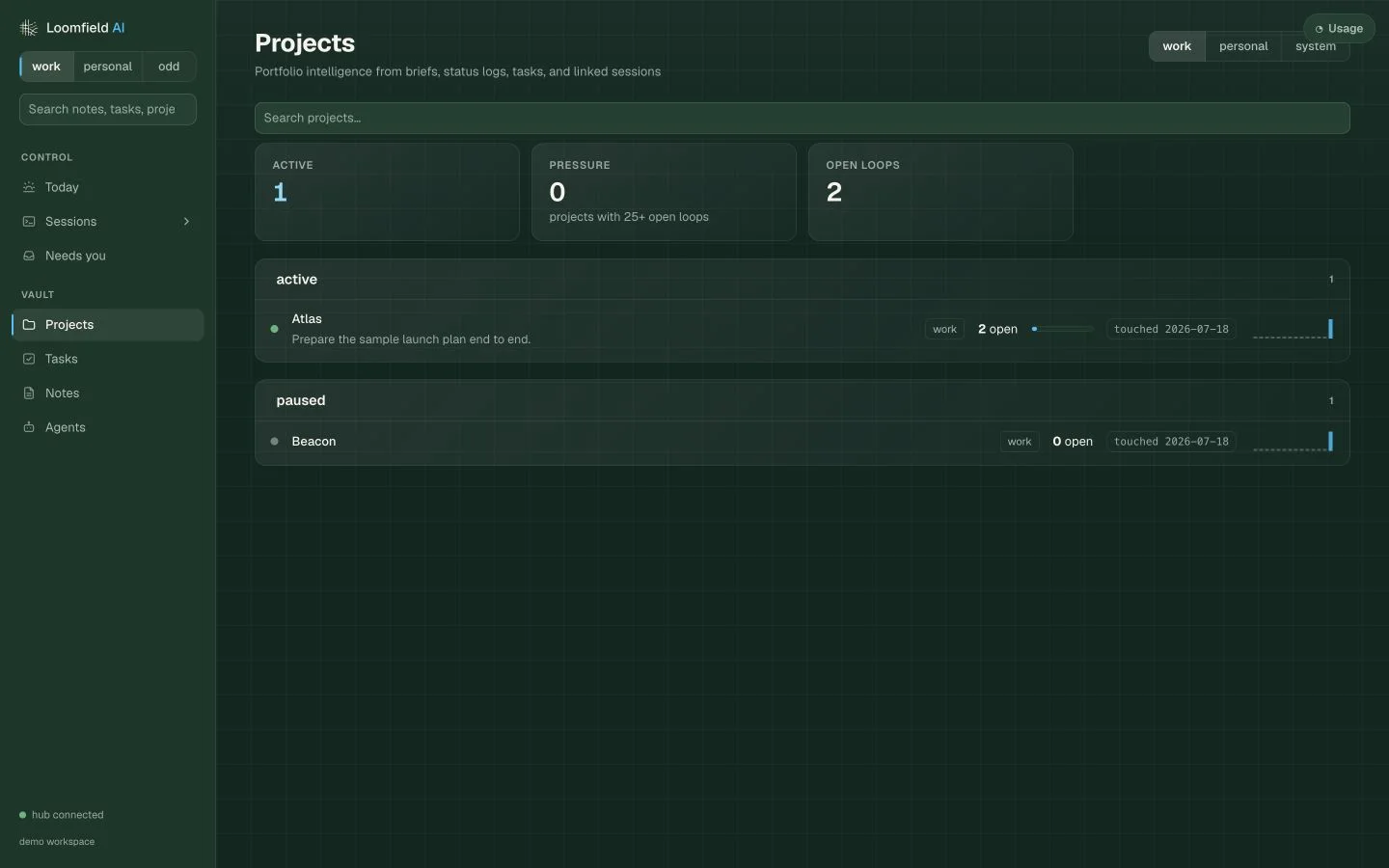
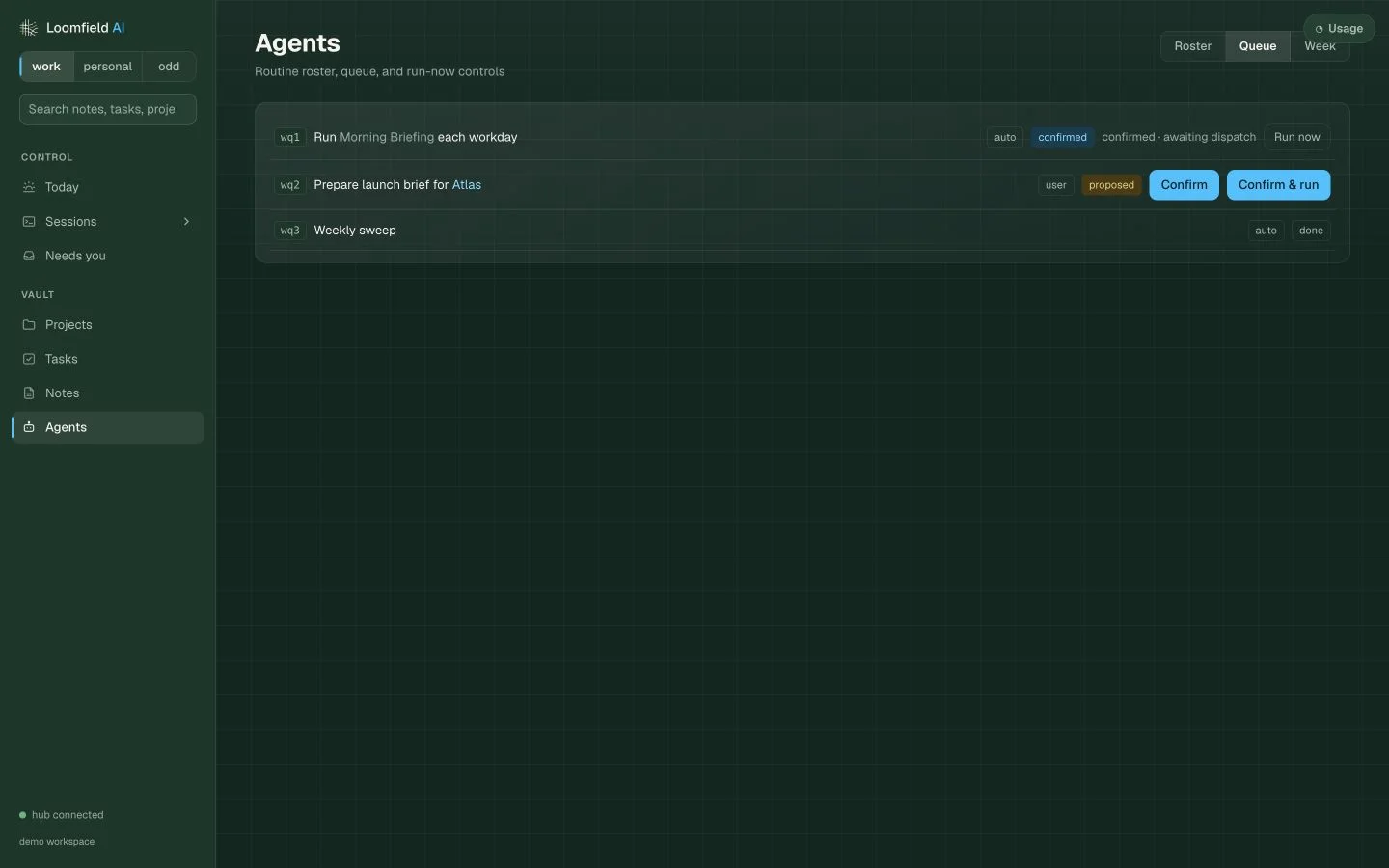
From assistance to earned automation
As Loomfield learns a reliable way of working, it can take on more of the setup, watch for the right moment, and bring you what still needs judgment. You decide how far each kind of work is allowed to go.
AI works alongside you while you lead the job and make every decision.
Loomfield notices due work, missing inputs, or a useful next step and brings it to you.
It gathers sources, runs checks, and prepares the draft, then waits for your judgment or approval.
Trusted routines run on schedule; exceptions and consequential actions come back to you.
Different work can stop at different levels. Keep sensitive work hands-on, let routine preparation run ahead, or approve a stable method to operate on schedule. The history, proposed actions, and exceptions remain visible.
Private beta
Start with a report, review, analysis, or follow-up you already do. No workflow builder or AI expertise required.